The push for alternative energy sources got a big shot in the arm, as researchers at Northwestern University announced on May 5th, 2014, that they had discovered a replacement for lead as a light absorber and energy converter in solar cells. Most of today's solar cells are made from crystalline silicon. While silicon has proven very efficient as a solar energy to electricity converter, because it tends to be heavy, it can make miniaturization of solar cells more difficult.
In recent years, researcher have gone to other, light weight crystalline materials called perovskites. The most common and efficient perovskite until now has been lead. Lead is a toxic material, and scientists had worried about environmental hazards, should wide spread use of lead based solar cell technology become prevalent. But, researchers at Northwestern University believe that they have found a solution. Instead of lead, the researchers used tin.
The new solar cell consists of five layers of material that are only one to two microns thick, which is thinner than a human hair. The first layer consist of glass that allows the light in The second layer, made of titanium oxide, coats the glass and acts as a photo catalyst. The tin is added next and acts as the light absorber. The fourth layer consist of pyridine which serves to seal the cell and close the electric circuit. The fifth layer is made of gold which acts as a contact.
Tin has not only proven to be lighter than lead, it is also cheaper and therefore more cost efficient. The only draw back, at this time, is that lead peroskites have a 15% to 19% solar energy to electricity conversion rate while tin peroskites are just now approaching 6%. However, the use of lead peroskites began in 2009, so it is highly conceivable that those solar cells that use tin peroskites could reach that rate or higher in another 5 years or so. Couple that with the new solar cell's light weight and not only may we see them used to power homes, but we might see them used to power automobiles, and in other applications as well.
Wednesday, May 7, 2014

Wednesday, April 30, 2014
Itunes Closes In On 800 Million Users
On April 23rd, 2014 Apple announced that iTunes was nearing 800 million accounts, despite the reported decline in digital download sales. That number is up from June 2013 by about 40%, when Apple announced that they had reached 575 million accounts. Apple estimates that more than 400 million of those accounts are tied to credit cards.
While the number of iTunes user accounts continues to climb, Apple is said to be considering an overhaul. Apple was hoping that iTunes Radio listeners would be doing a lot of clicking through to the iTunes store, but so far they only seen about 2% of them doing so. With the decline of downloads, more emphasis will be placed on streaming in an effort to fend off any momentum that might be gained by the other streaming services.
So far, Apple plans to create an on demand, subscription streaming service, as a companion to the ad supported service. Apple may also bring the iTunes store to the Android OS. Both of these possibility would increase Apple's access to more potential consumers.
While the number of iTunes user accounts continues to climb, Apple is said to be considering an overhaul. Apple was hoping that iTunes Radio listeners would be doing a lot of clicking through to the iTunes store, but so far they only seen about 2% of them doing so. With the decline of downloads, more emphasis will be placed on streaming in an effort to fend off any momentum that might be gained by the other streaming services.
So far, Apple plans to create an on demand, subscription streaming service, as a companion to the ad supported service. Apple may also bring the iTunes store to the Android OS. Both of these possibility would increase Apple's access to more potential consumers.
Wednesday, April 23, 2014
Possible Earth Sized Planet Confirmed
On April 17th 2014, NASA announced that the Kepler space telescope had discovered a planet about the size of the Earth orbiting a distant star. The planet, named Kepler-186f orbits an M-type dwarf star some 490 light years away. What is unique about this particular planet is that it is the first Earth sized planet that orbits its star in what is know as the "Goldilocks," or habitable zone.
The habitable zone is the area around a planet's star where the temperature is not too hot and not too cold, but just right to find liquid water, which is essential for life to form. Kepler-186f inhabits an orbit that would be similar to that of Mercury, here in our own solar system. But, since its star is an M-type, or Red dwarf star, the heat it emits is about a third of that of our sun. It is believed that Red dwarf stars make up 70% of all of the light we see in our own Milky Way.
Though Kepler-186f is slightly larger than the Earth, about 1.5 times its size, researchers feel that it is small enough to be a rocky planet just like the Earth. This is significant because most of the planets that have been found orbiting other stars have been extremely large. Finding smaller, rocky, earth like planets in the habitable zone could mean that these planets may also possess water.
There is still much research to do. It is not yet known what the planet's mass is, what elements it's composed of, or whether it has an atmosphere. While life needs water, it also needs a favorable atmosphere such as the Earth's oxygen, nitrogen, and carbon dioxide, which has proven necessary for maintaining and supporting that life. The type of atmosphere it has would also help to determine whether Kepler-186f is either too warm or too cold to support life, as we know it.
While it's too soon to say for certain, this discovery could possibly be the first of many. If that is found to be true, then Earth like planets orbiting stars similar to our own, in their habitable zones, may be common not only in this galaxy, but throughout the universe. That might mean that the possibilities for finding life would not be restricted to our own little corner of space time.
The habitable zone is the area around a planet's star where the temperature is not too hot and not too cold, but just right to find liquid water, which is essential for life to form. Kepler-186f inhabits an orbit that would be similar to that of Mercury, here in our own solar system. But, since its star is an M-type, or Red dwarf star, the heat it emits is about a third of that of our sun. It is believed that Red dwarf stars make up 70% of all of the light we see in our own Milky Way.
Though Kepler-186f is slightly larger than the Earth, about 1.5 times its size, researchers feel that it is small enough to be a rocky planet just like the Earth. This is significant because most of the planets that have been found orbiting other stars have been extremely large. Finding smaller, rocky, earth like planets in the habitable zone could mean that these planets may also possess water.
There is still much research to do. It is not yet known what the planet's mass is, what elements it's composed of, or whether it has an atmosphere. While life needs water, it also needs a favorable atmosphere such as the Earth's oxygen, nitrogen, and carbon dioxide, which has proven necessary for maintaining and supporting that life. The type of atmosphere it has would also help to determine whether Kepler-186f is either too warm or too cold to support life, as we know it.
While it's too soon to say for certain, this discovery could possibly be the first of many. If that is found to be true, then Earth like planets orbiting stars similar to our own, in their habitable zones, may be common not only in this galaxy, but throughout the universe. That might mean that the possibilities for finding life would not be restricted to our own little corner of space time.
Wednesday, April 16, 2014
Curiosity Rover Photo: Proof Of Life?
Photos taken by NASA's Curiosity Rover on April 2nd and 3rd, 2014 have been causing a stir. The photos taken from the rover's right navigation camera shows a light off in the distance, that appears to be shooting up from the surface. The photos created such a buzz that NASA was quick to issue a statement explaining their content.
The light, seen in both photos from the right navigation camera is said not to appear in photos taken by the left camera, at the same moment. NASA says that this could possibly be the result of a cosmic ray hit or the maybe the sun reflecting off of a distant rock.
Some who have viewed the photos have claimed the photos are proof of life on Mars. NASA is not willing to damage it's international reputation for good science by making highly speculative claims. NASA is attempting to explain the phenomenon using every reasonable and realistic criteria at it's disposal.
Since Curiosity's landing on Mars in August 2012 there have been lots of new discoveries. So far, the existence of life has not been one of them. However, when one looks at photos such as those released that show a light in the distance, one can't help but look at the landscape and marvel at how similar it looks when compared with that of the Earth's. Who could help wondering that even if life isn't found there, that proof that it once was there, may still be waiting to be discovered.
The light, seen in both photos from the right navigation camera is said not to appear in photos taken by the left camera, at the same moment. NASA says that this could possibly be the result of a cosmic ray hit or the maybe the sun reflecting off of a distant rock.
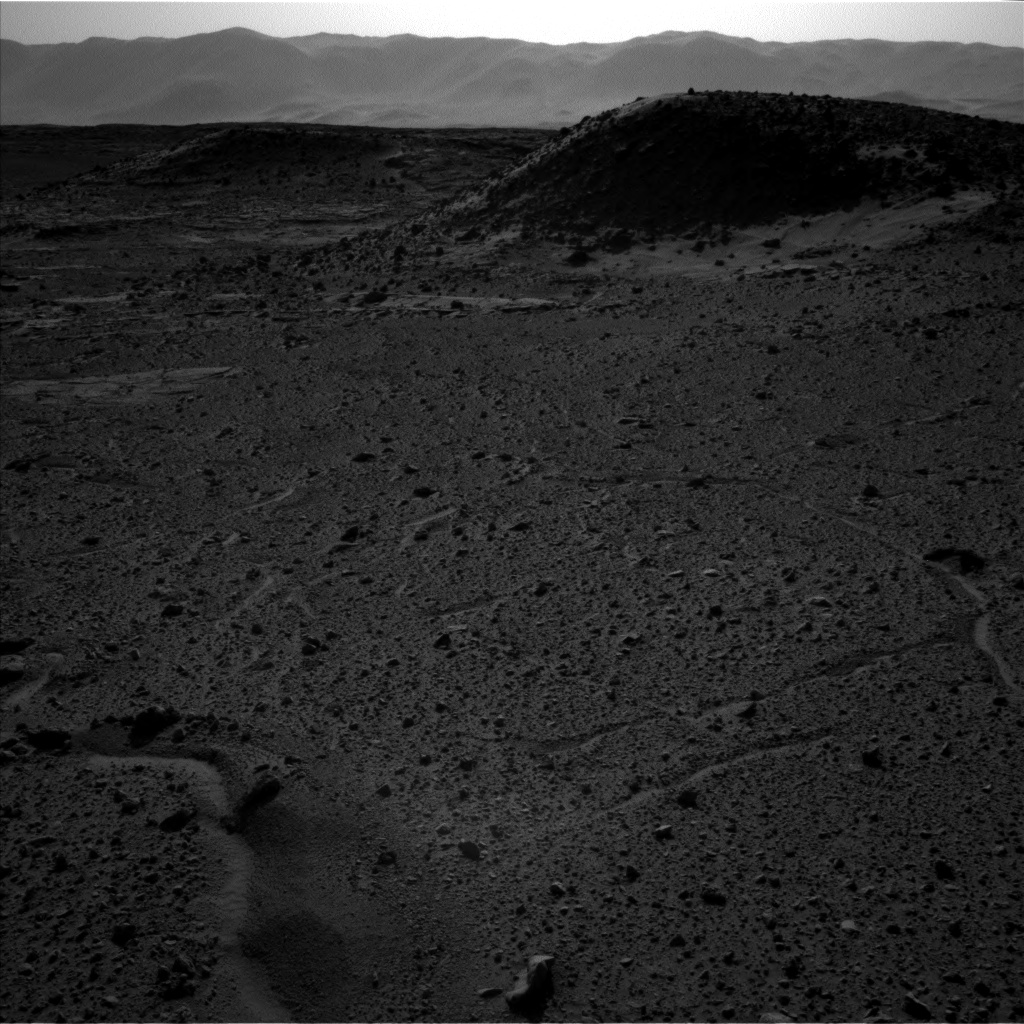
Some who have viewed the photos have claimed the photos are proof of life on Mars. NASA is not willing to damage it's international reputation for good science by making highly speculative claims. NASA is attempting to explain the phenomenon using every reasonable and realistic criteria at it's disposal.
Since Curiosity's landing on Mars in August 2012 there have been lots of new discoveries. So far, the existence of life has not been one of them. However, when one looks at photos such as those released that show a light in the distance, one can't help but look at the landscape and marvel at how similar it looks when compared with that of the Earth's. Who could help wondering that even if life isn't found there, that proof that it once was there, may still be waiting to be discovered.
Wednesday, April 9, 2014
The World Wide Web: Twenty Five Years On
On March 12th, 2014, Sir Tim Berners Lee used the 25th anniversary of his proposal for the World Wide Web as a call for an open internet. Sir Berners Lee created the the World Wide Web in 1990 and it went online in 1991. The Internet, which the World Wide Web is a part of, was created in 1962, although most sources lists it's creation in 1969.
Sir Berners Lee's message seemed to go in two different directions as he called for both "net neutrality," and DRM or Digital Rights Management. He also sees a need for government monitoring in an effort to prevent crime. He wants the Web to stay a decentralized, global network as opposed to different countries pulling away and creating their own intranets.
Sir Berners Lee wants the US to give up it's control of IANA (internet assigned numbers authority), which is the database for international domain names. He also wants the the US to revise the role of copyright laws and software patents. His view is that such laws only serve to protect the rights of movie producers as opposed to those of intellectual property holders.
Sir Berners Lee also expressed several needs that he feels should be addressed as part of the future of the Web. He believes that we need to find a way to connect the nearly 2/3 of the population that can not yet connect to the internet. He believes that there should be rules in place to govern the collection of personal data. And finally, he believes that a high performance architecture that can run on any device should be created.
I guess, and this is only my opinion, that the World Wide Web is very much a work in progress. As Sir Berners Lee himself states the Web has the potential to become a reflection of the real world. The question in my mind, as we go forward, is whether it is really possible to strike that very delicate balance of openness and monitoring that Sir Berners Lee is suggesting
Sir Berners Lee's message seemed to go in two different directions as he called for both "net neutrality," and DRM or Digital Rights Management. He also sees a need for government monitoring in an effort to prevent crime. He wants the Web to stay a decentralized, global network as opposed to different countries pulling away and creating their own intranets.
Sir Berners Lee wants the US to give up it's control of IANA (internet assigned numbers authority), which is the database for international domain names. He also wants the the US to revise the role of copyright laws and software patents. His view is that such laws only serve to protect the rights of movie producers as opposed to those of intellectual property holders.
Sir Berners Lee also expressed several needs that he feels should be addressed as part of the future of the Web. He believes that we need to find a way to connect the nearly 2/3 of the population that can not yet connect to the internet. He believes that there should be rules in place to govern the collection of personal data. And finally, he believes that a high performance architecture that can run on any device should be created.
I guess, and this is only my opinion, that the World Wide Web is very much a work in progress. As Sir Berners Lee himself states the Web has the potential to become a reflection of the real world. The question in my mind, as we go forward, is whether it is really possible to strike that very delicate balance of openness and monitoring that Sir Berners Lee is suggesting
Wednesday, April 2, 2014
Spotify's New Look
On Wednesday April 2, 2014, Spotify rolled out the new look of it's desktop and mobile applications. Gone is the familiar gray, replaced by a sleek black background and theme. Spotify, the Swedish music streaming service first debuted in 2008 in Europe and the UK. It was conceived as an alternative to illegal music downloads. Since then, Spotify has spread across the planet and has even achieved wide acceptance in the US.
The new look Spotify uses the black background to contrast the artwork. Artists' photos are presented as circles while the album art and playlists are square. The new Spotify design offers a new font style and green scroll bars, and gives more space for the search area.
Something new for Spotify is a "Your Music," section where users will be able to save music that they like, either albums or songs, to a personal collection where they can organize and browse them at a later date. Music is saved to your personal collection by way of a new + icon that you click after hovering over your favorite artists.
With so much being made of the so called, "streaming wars," I think this move by Spotify is not just a welcome change but definitely a step in the right direction.
The new look Spotify uses the black background to contrast the artwork. Artists' photos are presented as circles while the album art and playlists are square. The new Spotify design offers a new font style and green scroll bars, and gives more space for the search area.
Something new for Spotify is a "Your Music," section where users will be able to save music that they like, either albums or songs, to a personal collection where they can organize and browse them at a later date. Music is saved to your personal collection by way of a new + icon that you click after hovering over your favorite artists.
With so much being made of the so called, "streaming wars," I think this move by Spotify is not just a welcome change but definitely a step in the right direction.
Wednesday, March 26, 2014
Gravity Waves: Evidence Of The Big Bang
On March 17th 2014, the Harvard-Smithsonian Center for Astrophysics announced that they had discovered more evidence of the Big Bang, in the form of Gravity Waves. Gravity Waves were first predicted by Albert Einstein as part of his theory of General Relativity almost a century ago. The discovery also lends proof of the theory of Inflation, as put forth by Dr. Alan Guth in 1980. Gravitational Waves are ripples of energy within the fabric of space-time that move outward from the Big Bang at the speed of light.
The experiment, called, BICEP2 (Background Imaging of Cosmic Extra-galactic Polarization 2) took place at an observatory at the South Pole. Researchers used a telescope to detect a pattern of premordial B-mode polarization in the light coming from the Cosmic Microwave Background Radiation or CMB. Gravitational Waves squeeze space-time as they propagate. While telescopes can't see Gravity Waves they can see the evidence they leave behind.
The polarization of light waves resulted in a pattern that was twisted and unique to the Big Bang. One researcher stated that they had made an image of of the Gravity Waves and that it "looks like a swirly pattern across the sky." This twisting of light found in the Cosmic Microwave Background is also an implication of Inflation, which is believed to be a brief but rapid expansion of the early universe.
The discovery of Gravity Waves is huge. Some believe that it's bigger than the discovery of the Higgs Boson. In my opinion, it may even one day help physicists explain the existence of Dark Energy.
The experiment, called, BICEP2 (Background Imaging of Cosmic Extra-galactic Polarization 2) took place at an observatory at the South Pole. Researchers used a telescope to detect a pattern of premordial B-mode polarization in the light coming from the Cosmic Microwave Background Radiation or CMB. Gravitational Waves squeeze space-time as they propagate. While telescopes can't see Gravity Waves they can see the evidence they leave behind.
The polarization of light waves resulted in a pattern that was twisted and unique to the Big Bang. One researcher stated that they had made an image of of the Gravity Waves and that it "looks like a swirly pattern across the sky." This twisting of light found in the Cosmic Microwave Background is also an implication of Inflation, which is believed to be a brief but rapid expansion of the early universe.
The discovery of Gravity Waves is huge. Some believe that it's bigger than the discovery of the Higgs Boson. In my opinion, it may even one day help physicists explain the existence of Dark Energy.
Subscribe to:
Posts (Atom)